clean air for keiki
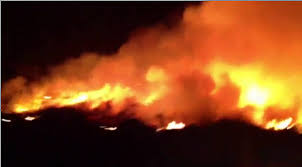
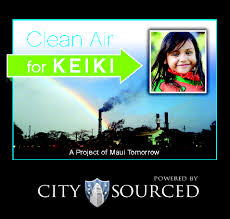
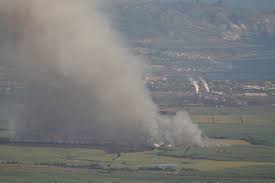
REPORT SMOKE, ASH, DUST, PESTICIDE OVERSPRAY BY CLICKING HERE Clean Air for Keiki The scientific evidence of harm from particulate (smoke and dust) pollution has mounted. Keiki on Maui are subjected to serious air pollution. Some we can’t do anything about like vog. But some we can reduce like cane smoke and fugitive dust. Nearly 2,000 peer reviewed medical articles establish that smoke, like that from sugarcane field burning, causes or exacerbates severe health problems, including asthma and increased risk of death from heart attack and stroke, as well as common respiratory problems, and eye and nasal irritation. The CDC says that asthma rates for our Maui keiki are 2% higher than the state average. This would tend to support the hypothesis that the one pollutant that is found only on Maui could be at fault: Cane smoke. Hawaiian Commercial and Sugar (HC&S) has been profiting from burning sugar cane on Maui for decades. HC&S burns one-half of its 36,000 acres of cane fields every year, usually from March through November.
In 2012, burning extended into December. In its most recent financial report, the HC&S’s parent company, Alexander & Baldwin, stated that “improvements in yields and higher sugar prices helped us achieve an operating profit of $22 million in 2011, over three times greater than 2010′s results and the highest level in over a decade.” Aren’t our keiki more valuable than HC&S profit? Isn’t it time to end the unhealthy practice of cane burning and harvest without burning as Australia and Brazil are doing? continues to push for better air quality for Maui’s residents and visitors. Through our CleanAirMaui smartphone app the state Dept. Of Health is investigating issues of excessive smoke and dust from HC&S and Monsanto fields along with pollution from coal burned at Pu‘unene Mill where a $1.3 million fine was issued this year for air quality violations. With support from the Environmental Protection Agency we are asking HC&S to form a task force of stakeholders to explore how we move towards greater green harvesting of HC&S fields, in particular, those fields close to the residential areas of North Kihei and Paia.
Begin Making your report by entering a location: The Kilauea volcano has been erupting since 1983, and we’ve had vog – especially during Kona (South) winds. There isn’t anything we can do to remove this from our outdoor air. We can, however, lessen man-made sources of air pollution that increase illness. Physicians tell us that this can make a big difference to our Keiki’s health. Please Report incidents where you have been impacted by smoke or dust at ground level
ionic air purifier danger Include Date, Time, Location, Your name, Your address.
hepa air purifier bionaire New 2015 rules require that to take action, you need to include a statement in the comments saying “I will testify.”
best air purifier for cystic fibrosis
However, if you do not want to say that, please submit your report anyway. If your health has been impacted, please take the Maui Tomorrow Air Quality Health SurveyHu Honua Bioenergy LLC – Covered Source Permit (Issued: February 18, 2016) Air Issues Handled by Other Agencies Annual Fee Forms for Covered and Noncovered Source Permits (2016 Fees for operations in CY 2015) Permit Application Forms: Agricultural Burning, Covered and Noncovered Source Permits Request to Access a Government Record Form (PDF)Hawaiian Commercial & Sugar Co. CSP No. 0054-01-C (issued November 3, 2015) Final Amendments to Hawaii Administrative Rules (effective June 30, 2014) Issued Notices and Findings of Violation and Order Public Notices – Clean Air Branch Air Monitoring and Data Federal and State Ambient Air Quality Standards (PDF) Notification of Exceedance of NAAQS Hawaii Ambient Air Quality Data EPA AIRNow Hawaii web page Air Permitting and Emissions Inventory

Air Emissions Reporting Requirements (AERR) and State & Local Emissions Inventory System (SLEIS) Hawaii Greenhouse Gas Program Combustion Portal: Applicability Tool for R.I.C.E., compliance info for boilers, Subparts IIII, JJJJ, & ZZZZ (EPA-funded) Hawaii Fugitive Dust Fact Sheet Oct 2014 (PDF) Volcanic Emissions and Vog Hawaii Interagency Vog Information Dashboard Hawaii Short Term SO2 Advisory Vog Measurement and Prediction (VMAP) Project Frequently Asked Questions on Vog Open Burning, Agricultural Burning Permits, and Cane Burning in Hawaii Frequently Asked Questions: 2012 Amendments to HAR 11-60.1 Open Burning (PDF) Open Burning Brochure – August 2013 (PDF) Hawaii Air Quality Data Books 2014 New Year’s Data (PDF) 2015 Air Monitoring Network Plan (PDF) 2015 Ambient Air Monitoring Network 5-Year Assessment (PDF) 2015 Annual Report for Campbell Industrial Park (PDF) At most times and in most places in Hawaii, we enjoy some of the best air quality in the nation.
However, we do have air pollution as does any metropolitan area, so the Department of Health (DOH) works diligently to regulate and monitor air pollution sources. The Clean Air Branch (CAB) is responsible for air pollution control in the state. The primary services of the branch are provided by its three sections: Engineering, Monitoring, and Enforcement. These sections conduct engineering analysis and permitting, perform monitoring and investigations, and enforce the federal and state air pollution control laws and regulations. Reviews air applications and issues air permits of potential air pollution stationery sources. Evaluates, through application of dispersion modeling, the potential impact of an air pollution source on ambient air quality. Evaluates the control technology, operations, and fuels consumed to assess the types and potential air emissions from the various sources. Compiles and maintains a statewide air emissions inventory for the air pollution sources. Monitors the activities of the stationary sources for compliance with the applicable rules and permit conditions.

Recommends enforcement action where violations have occurred. Conducts annual inspections of major sources and investigates incidents and complaints. In conjunction with the Air Laboratory, establishes and maintains the ambient air monitoring network and conducts special air monitoring studies as necessary. Compiles, assesses, and manages the data retrieved from the monitoring stations producing applicable graphs and reports. Initiates case development of alleged violations, determines the penalty, drafts and issues the notice of violation, and assists and participates in the conference, hearing, and legal process. Assesses, proposes, or comments on corrective measures, settlement agreements, penalties, and administrative or court actions. Conducts “smoke reading” training classes to provide continuing certification of inspectors in the technique of evaluating visible smoke. The following are the federal and state laws and regulations that are associated with the control of air pollution and which authorize and direct the Clean Air Branch: